
The Disinherited Nations
Divided and Assigned
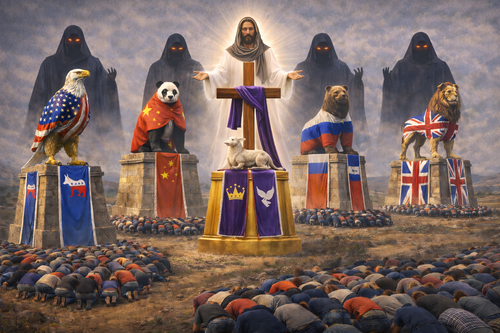
Today's Reading:
Deuteronomy 32:8–9
Key Verse:
When the Most High gave the nations their inheritance and divided the human race, he fixed the boundaries of the peoples according to the number of the sons of God. But the LORD’s portion is his people, Jacob, his own inheritance. (Deuteronomy 32:8–9)
Devotional
Last week we saw humanity once again turn God's blessing into rebellion. He commanded to go, but humanity gathered. He invited them out into the world to flourish under His name, but they sought to make their own. This wasn't just an architectural failure, it was a spiritual fracture.
What happens next is the subject of considerable debate. After the dispersal, God divided the nations and set their boundaries, placing them under the rule of someone. Some recent translations use the phrase "according to the number of the people of Israel" while others use "according to the number of the sons of God." The difference is important!
More recent Hebrew texts (the Masoretic to be exact) renders this passage using the word yiśrā'ēl, or Israel. Once the Dead Sea Scrolls were discovered, which are a much older manuscript, they render it using bene elohim, or sons of God, a concept we've discussed before. I'll spare you the gory details here, but most scholars today take the view that "sons of God", meaning lesser divine, or spiritual, beings is the proper rendering of this passage.
So, in short, after the dispersal God set the geographical boundaries of the nations, placing them under the rule of members of His divine family. Looking back, Moses could see that the group God took for Himself to rule, here referred to as Jacob, would very soon become the people who would later be known as Israel.
I know this sounds weird, but it helps to explain so much of the biblical story that will follow. This isn't a world of competing mythology or pantheism (many gods) but it is describing a world in which one True God remains absolutely supreme, but as part of His judgment and correction of mankind, he places them under the rule of lesser created beings and disinherits them in favor of His chosen portion.
Humans wanted a life apart from God, so He gave them a taste of what rule apart from him would become.
However, as we've seen before, God isn't abandoning His plan to redeem all of creation. Tucked inside this seemingly dark turn, remains a promise. God may have chosen only one of the nations to be His portion, but it was His plan to reclaim ALL the nations through the ones He had chosen. This disinheritance of the nations sets the stage for the ultimate mission of redemption. What looks like rejection on the surface, is actually the beginning of a very clever rescue plan.
Deuteronomy 32 isn't pulling us into whimsical fantasy, it is inviting us into Biblical reality. The world after Babel would become a spiritual battleground, where ground, rule, and authority are the subjects of countless battles. The nations are real. The unseen rulers are real. But God's absolute sovereignty remains intact and absolute. His covenant purpose is still moving forward.
What happens next is the subject of considerable debate. After the dispersal, God divided the nations and set their boundaries, placing them under the rule of someone. Some recent translations use the phrase "according to the number of the people of Israel" while others use "according to the number of the sons of God." The difference is important!
More recent Hebrew texts (the Masoretic to be exact) renders this passage using the word yiśrā'ēl, or Israel. Once the Dead Sea Scrolls were discovered, which are a much older manuscript, they render it using bene elohim, or sons of God, a concept we've discussed before. I'll spare you the gory details here, but most scholars today take the view that "sons of God", meaning lesser divine, or spiritual, beings is the proper rendering of this passage.
So, in short, after the dispersal God set the geographical boundaries of the nations, placing them under the rule of members of His divine family. Looking back, Moses could see that the group God took for Himself to rule, here referred to as Jacob, would very soon become the people who would later be known as Israel.
I know this sounds weird, but it helps to explain so much of the biblical story that will follow. This isn't a world of competing mythology or pantheism (many gods) but it is describing a world in which one True God remains absolutely supreme, but as part of His judgment and correction of mankind, he places them under the rule of lesser created beings and disinherits them in favor of His chosen portion.
Humans wanted a life apart from God, so He gave them a taste of what rule apart from him would become.
However, as we've seen before, God isn't abandoning His plan to redeem all of creation. Tucked inside this seemingly dark turn, remains a promise. God may have chosen only one of the nations to be His portion, but it was His plan to reclaim ALL the nations through the ones He had chosen. This disinheritance of the nations sets the stage for the ultimate mission of redemption. What looks like rejection on the surface, is actually the beginning of a very clever rescue plan.
Deuteronomy 32 isn't pulling us into whimsical fantasy, it is inviting us into Biblical reality. The world after Babel would become a spiritual battleground, where ground, rule, and authority are the subjects of countless battles. The nations are real. The unseen rulers are real. But God's absolute sovereignty remains intact and absolute. His covenant purpose is still moving forward.
Reflection
It's fairly easy to reduce the brokenness of the world to simple politics, rotten culture, and broken human systems. Those things matter, for sure, but Scripture tells us there is far more happening than we can see. Our allegiances and alignments reach much deeper than our national government, culture, or political system.
How does this understanding change or impact your view of the world when you remember that human rebellion has spiritual consequences? How can it steady you to know that even when God gives people over in judgment, he is still working His plan of redemption?
How does this understanding change or impact your view of the world when you remember that human rebellion has spiritual consequences? How can it steady you to know that even when God gives people over in judgment, he is still working His plan of redemption?
Prayer
Father, open my eyes to the deeper reality of your World, seen and unseen. Help me to see the world is more than the material parts I can readily perceive, more than politics and culture. Teach me to trust in your sovereignty and power, even when the nations rage and the world feels fractured and broken. Thank you that your righteous judgments are never random and that your redemptive plan will never fail. Amen.
Follow the Kingdom Vision Podcast on all your major outlets for related discussion of each week's devotionals.
Further Study
Visit The Academy in The Crucible's Fire app or online for deeper study and self-paced instruction on How to Study the Bible and MUCH MORE.
For you, God, tested us; you refined us as silver is refined. (Psalm 66:10)
Recent
Archive
2026
January
Week 1. Day 4: The Word Became FleshWeek 1. Day 5: His Glory Among UsWeek 2. Day 1: Created for PurposeWeek 2. Day 2: Two Type of PowerWeek 2. Day 3: Formed for PurposeWeek 2. Day 4: The Visible Life of FaithWeek 2. Day 5: A Kingdom of PriestsWeek 3. Day 1: The Divine CounselWeek 3. Day 2: A Family View of RealityWeek 3. Day 3: The Indescribable Voice of GodWeek 3. Day 4: The Joy of BelongingWeek 3. Day 5: He Alone is WorthyWeek 4. Day 1: Fractured TrustWeek 4. Day 2: Shared Ruin and Complete RescueWeek 4. Day 3: Truth in the Hidden PlacesWeek 4. Day 4: Love Steps Into the DarknessWeek 4. Day 5: The Joy of Being KnownWeek 5. Day 1: Hope in JudgementWeek 5. Day 2: Assurance of HopeWeek 5. Day 3: Trust MeWeek 5. Day 4: This is the WayWeek 5. Day 5: The Lord is a Great God
February
Week 6. Day 1: Cast Out, Not AbandonedWeek 6. Day 2: Looking for a CityWeek 6. Day 3: A Thirst for HomeWeek 6. Day 4: He Is the WayWeek 6. Day 5: Waiting With ConfidenceWeek 7. Day 1: When Guardians Abandon Their PostWeek 7. Day 2: A Proclamation of VictoryWeek 7. Day 3: Shelter in a Fractured WorldWeek 7. Day 4: The Disarmed PowersWeek 7. Day 5: Be Still and KnowWeek 8. Day 1: When Mercy Finds A NameWeek 8. Day 2: A Father’s GriefWeek 8. Day 3: How Long, Lord?Week 8. Day 4: Compassion In ActionWeek 8. Day 5: The Counsel of the Lord StandsWeek 9. Day 1: Restrained by MercyWeek 9. Day 2: Mercy with a MemoryWeek 9. Day 3: Through Fire and WaterWeek 9. Day 4: As It Was In the Days of NoahWeek 9. Day 5: Faithful Love
March
Week 10. Day 1: A Bow in the CloudsWeek 10. Day 2: A Promise of GraceWeek 10. Day 3: The Lord Is My StrengthWeek 10. Day 4: The Answer is 'Yes'Week 10. Day 5: Forever FaithfulWeek 11. Day 1: A Name for OurselvesWeek 11. Day 2: The One Who Sits AboveWeek 11. Day 3: Blessed for BlessingWeek 11. Day 4: ReversalWeek 11. Day 5: Sing to the Lord, All the EarthWeek 12. Day 1: Divided and AssignedWeek 12. Day 2: The gods on TrialWeek 12. Day 3: The King the Nations ResistWeek 12. Day 4: Not Against Flesh and BloodWeek 12. Day 5: The Earth Is the Lord’sWeek 13. Day 1: Delayed, Not DefeatedWeek 13. Day 2: Enthroned AboveWeek 13. Day 3: I Lift My EyesWeek 13. Day 4: The Holy One of GodWeek 13. Day 5: Trained for Battle, Anchored in PraiseWeek 14. Day 1: A Light for the NationWeek 14. Day 2: The World Belongs to the King
April
Week 14. Day 3: Let the Nations Be GladWeek 14. Day 4: The Mission Takes on FleshWeek 14. Day 5: Small Psalm, Huge InvitationWeek 15. Day 1: When the Whole World GroansWeek 15. Day 2: Eternity in a Restless HeartWeek 15. Day 3: Prayer from AshesWeek 15. Day 4: When God Enters Our GriefWeek 15. Day 5: From Dust to PraiseWeek 16. Day 1: Chosen for the WorldWeek 16. Day 2: A Growing FamilyWeek 16. Day 3: He Remembered His CovenantWeek 16. Day 4: Abraham Saw the Day of ChristWeek 16. Day 5: Let the Nations Be GladWeek 17. Day 1: Count the Stars, Trust the PromiseWeek 17. Day 2: Faith Beyond SightWeek 17. Day 3: The Life Faith ProducesWeek 17. Day 4: Faith That Leads to JesusWeek 17. Day 5: Faith From AfarWeek 18. Day 1: God Hears Their CryWeek 18. Day 2: Seeing Beyond the SeaWeek 18. Day 3: Rescued and ForgetfulWeek 18. Day 4: The True Exodus
May
Week 18. Day 5: From Rescue to DwellingWeek 19. Day 1: Carried to the MountainWeek 19. Day 2: A Priestly PeopleWeek 19. Day 3: The Delight of RescueWeek 19. Day 4: Loving ObedienceWeek 19.Day 5: Living a Life of WorshipWeek 20. Day 1: When God’s People ForgetWeek 20. Day 2: When Knowledge DisappearsWeek 20. Day 3: The Heart That Turns AwayWeek 20. Day 4: When Religion Hides RebellionWeek 20. Day 5: Restore Us AgainWeek 21. Day 1: A House God BuildsWeek 21. Day 2: When the Nations RageWeek 21. Day 3: Receiving His Rule
No Comments